

Why You Need a Fish Tank Filter
If you’re setting up your first aquarium, you might be wondering: Do I really need a fish tank filter? The short answer? Absolutely—yes.
A fish tank filter is more than just a piece of equipment—it’s the life support system of your aquatic world. It keeps the water clean, removes toxins like ammonia and nitrites, and ensures your fish stay happy and healthy. Without a filter, harmful waste builds up fast, leading to cloudy water, sick fish, and an unstable environment.
Most filters provide mechanical, biological, and sometimes chemical filtration:
- Mechanical filtration physically traps debris (like leftover food or plant bits).
- Biological filtration fosters beneficial bacteria that break down toxic waste.
- Chemical filtration, often using activated carbon, removes odors and discoloration.
Not using a filter means you’re manually doing water changes constantly—and risking fish stress and disease. Even for small tanks or betta bowls, a gentle filter (like a sponge filter) makes a massive difference.
Plus, filters help circulate the water, boosting oxygen levels and supporting the aquarium nitrogen cycle—a crucial process for any healthy tank.
In short, if you’re serious about keeping your fish alive (and thriving), a fish tank filter isn’t optional—it’s essential.
Also check – Bala Shark Care: Tank Size, Mates & Diet for Healthy Sharks
Types of Fish Tank Filters Explained
Choosing the right fish tank filter starts with understanding the different types available. Each filter type has its own strengths, and the best choice depends on your tank size, fish species, and budget. Let’s break down the most common types of aquarium filters you’ll encounter:

Sponge Filters
Sponge filters are ideal for small tanks, betta fish, or breeding tanks. They provide gentle water flow and excellent biological filtration, making them perfect for sensitive fish or fry. While they don’t offer strong mechanical or chemical filtration, they’re low-cost and air-driven—making them beginner-friendly and nearly silent.
Hang-on-Back (HOB) Filters
Also called power filters, these are the most common choice for small to medium-sized aquariums. They hang on the tank’s edge and offer mechanical, biological, and chemical filtration all in one. Easy to install and maintain, HOB filters are great for new hobbyists looking for convenience and reliability.
Canister Filters
If you’re running a large aquarium (over 40 gallons), a canister filter is your powerhouse. These sit outside the tank and push water through multiple filter media layers, giving you superior cleaning power. They’re ideal for planted aquariums, heavily stocked tanks, or anyone who wants crystal-clear water. While they’re more expensive and require some setup effort, their efficiency makes them worth it.
Internal & Undergravel Filters
Internal filters sit inside the tank and are submerged in water. They’re simple and affordable, good for smaller setups or quarantine tanks. Undergravel filters, on the other hand, pull water through the substrate and are often outdated—but still used in basic setups. However, they require regular gravel vacuuming and aren’t ideal for heavily stocked tanks.
Knowing these types helps you match your filter to your tank’s needs—whether you’re setting up a 10-gallon betta tank or a 75-gallon cichlid showpiece
Remember, the best fish tank filter is one that keeps your water clean, supports your fish’s health, and fits your maintenance style.
How to Choose the Right Fish Tank Filter
Picking the right fish tank filter can feel overwhelming—but it doesn’t have to be. It’s all about matching the filter to your aquarium’s size, setup, and the type of fish you’re keeping.
First, consider the tank size. A general rule of thumb is to choose a filter that can turn over the full volume of your tank at least 3 to 5 times per hour—or more if you have a heavily stocked tank. For example, a 20-gallon tank should have a filter rated for 60–100 gallons per hour (GPH).
Next, think about filter media. You’ll want something that offers mechanical, biological, and chemical filtration. Many beginner-friendly options, like hang-on-back (HOB) filters, come pre-loaded with all three.
Also, pay attention to noise level and maintenance. If your tank is in a quiet space like a bedroom or office, you might prefer a silent canister filter or a gentle sponge filter. And if you’re short on time, choose a system that’s easy to clean and doesn’t require dismantling every week.
Finally, consider your fish. Planted tanks or betta fish do better with low-flow filters, while cichlids and goldfish need powerful options like canister filters.
Choosing the right fish tank filter ensures long-term success—saving you headaches and your fish from stress.
Step-by-Step Fish Tank Filter Setup Guide
Installing your fish tank filter the right way sets the foundation for a clean and thriving aquarium. Whether you’re using a sponge filter, hang-on-back, or canister filter, the steps are generally straightforward. Here’s a beginner-friendly guide to get you started:
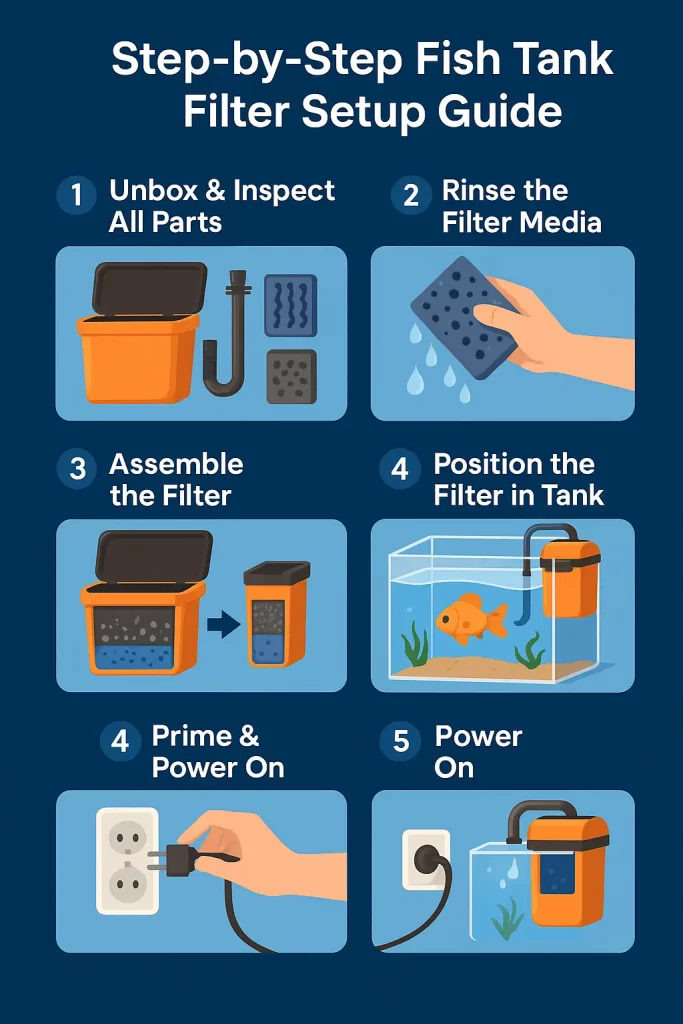
Step 1: Unbox & Inspect All Parts
Before anything else, lay out all the filter components and double-check the instruction manual. Most filters include the main unit, intake/output tubes, media baskets, and sometimes filter cartridges.
Step 2: Rinse the Filter Media
New filter media often comes with manufacturing dust. Rinse mechanical sponges, ceramic rings, or activated carbon under dechlorinated water (never tap water!) to avoid harming beneficial bacteria.
Step 3: Assemble the Filter
Load the media baskets properly:
- Mechanical media (sponge, floss) goes first
- Biological media (ceramic rings, bio balls) goes next
- Chemical media (carbon, resins) is usually last
Follow the manufacturer’s instructions for arranging everything in order.
Step 4: Position the Filter in Your Tank
- Hang-on-back filters go on the back rim
- Sponge filters sit inside the tank, connected to an air pump
- Canister filters sit below the tank with hoses running in/out
Ensure nothing blocks the intake or outflow and that it’s not near substrate or décor that could clog it.
Step 5: Prime & Power On
Some filters (like canisters) need priming—filling the chamber with water before turning it on. Once it’s primed, plug it in and observe the flow.
You should see smooth water movement and hear minimal noise. That’s it—your fish tank filter is officially running!
Let the filter cycle for at least 24 hours before adding fish. This gives beneficial bacteria a chance to establish.
Common Fish Tank Filter Mistakes to Avoid
Even with the best fish tank filter, beginner mistakes can lead to poor water quality, stressed fish, or even equipment damage. The good news? Most of these mistakes are easy to avoid once you know what to look out for.
Mistake #1: Using the Wrong Filter Size
Many new aquarists underestimate the importance of matching filter capacity with tank size. If your filter is too weak, it won’t clean the water efficiently. Too strong? It could create strong currents that stress out fish—especially in betta or planted tanks.
Mistake #2: Cleaning All the Media at Once
It’s tempting to deep clean your entire filter during maintenance, but that’s a big no-no. Doing so wipes out beneficial bacteria that handle biological filtration. Always rinse only one part of your media at a time in tank water, not tap water.
Mistake #3: Skipping Priming or Setup Steps
Many canister filters require priming before starting. Forgetting this step can lead to dry-running or weak flow. Also, make sure your intake and outflow tubes are properly secured and not blocked by gravel or décor.
Mistake #4: Ignoring Water Flow
Your filter should create a steady flow, but not a tornado. Check that it’s circulating water across the entire tank, especially in corners where debris may settle.
Avoiding these mistakes not only keeps your tank clean—it helps your fish tank filter last longer and perform more efficiently. Up next, let’s keep that filter running strong with some easy maintenance tips.
Check the links to buy
- Aquarium Filter: A small but powerful aquarium filter is a must. Look for one designed for small tanks (often labeled as a small aquarium filter) to keep your water clean and your fish healthy.
- Heater: If you’re keeping tropical fish, a fish tank heater is essential to maintain a stable water temperature around 75–78°F.
- Lighting: LED lights built into a tank hood are great for both aesthetics and plant growth.
- Thermometer: Helps you monitor the water temperature.
- Water Conditioner: Removes chlorine and harmful chemicals from tap water.
- Gravel/Substrate: Besides looking good, it’s necessary for beneficial bacteria.
- Test Kit: To monitor ammonia, nitrites, and nitrates—critical for tank cycling.
FAQs About Fish Tank Filters
Q1: How often should I clean my fish tank filter?
A: Clean mechanical media (like sponges or floss) every 2–3 weeks. Replace chemical media monthly. Avoid cleaning biological media unless it’s clogged—and only rinse it in tank water to protect the good bacteria.
Q2: Can fish survive without a filter?
A: Technically, yes—but it’s highly discouraged. Without a fish tank filter, toxins like ammonia and nitrites build up fast. Frequent water changes would be required, and even then, water parameters can swing dangerously. Filters keep your tank stable and your fish safe.
Q3: What’s the best fish tank filter for beginners?
A: For tanks under 30 gallons, hang-on-back (HOB) filters offer the best balance of ease, affordability, and performance. For smaller setups or bettas, sponge filters are a quiet, gentle choice.
Q4: Should I turn off my filter at night?
A: Never. Your aquarium filter must run 24/7 to maintain water flow, oxygenation, and the nitrogen cycle. Turning it off even overnight can stress your fish and damage water quality.
Q5: What’s the best filter for a planted or betta tank?
A: For low-flow tanks, use sponge filters or internal filters with adjustable flow. These are gentle on fins and won’t disturb plant growth or substrate.
These common questions cover the basics, but if you’re still unsure, always match your fish tank filter choice to your tank size, fish type, and budget.